
Die Application Gallery bietet COMSOL Multiphysics® Tutorial- und Demo-App-Dateien, die für die Bereiche Elektromagnetik, Strukturmechanik, Akustik, Strömung, Wärmetransport und Chemie relevant sind. Sie können diese Beispiele als Ausgangspunkt für Ihre eigene Simulationsarbeit verwenden, indem Sie das Tutorial-Modell oder die Demo-App-Datei und die dazugehörigen Anleitungen herunterladen.
Suchen Sie über die Schnellsuche nach Tutorials und Apps, die für Ihr Fachgebiet relevant sind. Beachten Sie, dass viele der hier vorgestellten Beispiele auch über die Application Libraries zugänglich sind, die in die COMSOL Multiphysics® Software integriert und über das Menü File verfügbar sind.

Fluence rate is a key parameter for ultraviolet (UV) water purifier. It describes the amount of radiation that pathogens absorb and is then directly related to the disinfection level of the purifier. The aim of this example is to demonstrate the fluence rate calculation with the ... Mehr lesen

The purpose of this model is to introduce the specular reflection in Surface-to-Surface Radiation using the ray-shooting algorithm. Different parameters are available to the user to yield better accuracy in the results when using the ray-shooting algorithm. The model is a standard ... Mehr lesen

Um das Risiko der Gerinnung und der Bildung von Blutgerinnseln in einem abdominalen Aortenaneurysma (AAA) zu verstehen, können Modellierung und Simulation verwendet werden, um den Blutfluss durch das AAA zu untersuchen. In diesem Beispiel wird das Blut als Oldroyd-B-Fluid modelliert. ... Mehr lesen
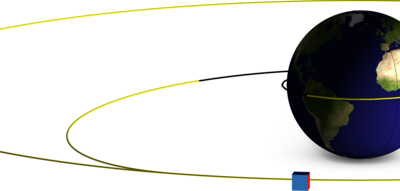
This model shows the workflow to define a transfer orbit trajectory with user defined orbit option. The direct solar, albedo, and Earth radiative thermal loads are analyzed during the transfer from low Earth orbit to geostationary orbit. Mehr lesen

Modeling and simulation is useful for evaluating the feasibility of storing hydrogen underground. In this example of a geological formation, hydrogen is injected through an injection well at a rate of 1 kg/s over a period of 2 years, until it is ready to be extracted and discharged ... Mehr lesen
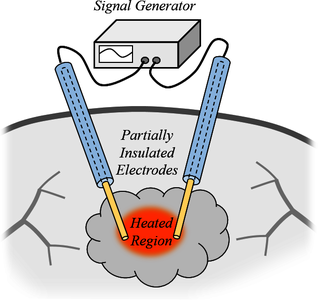
Dieses Beispiel zeigt, wie Sie die Gewebeablation durch Anwendung von Hochfrequenzstrahlung modellieren können. Eine detailliertere Beschreibung des Phänomens und des Modellierungsprozesses finden Sie in dem Blog-Beitrag "Study Radiofrequency Tissue Ablation Using Simulation". Mehr lesen
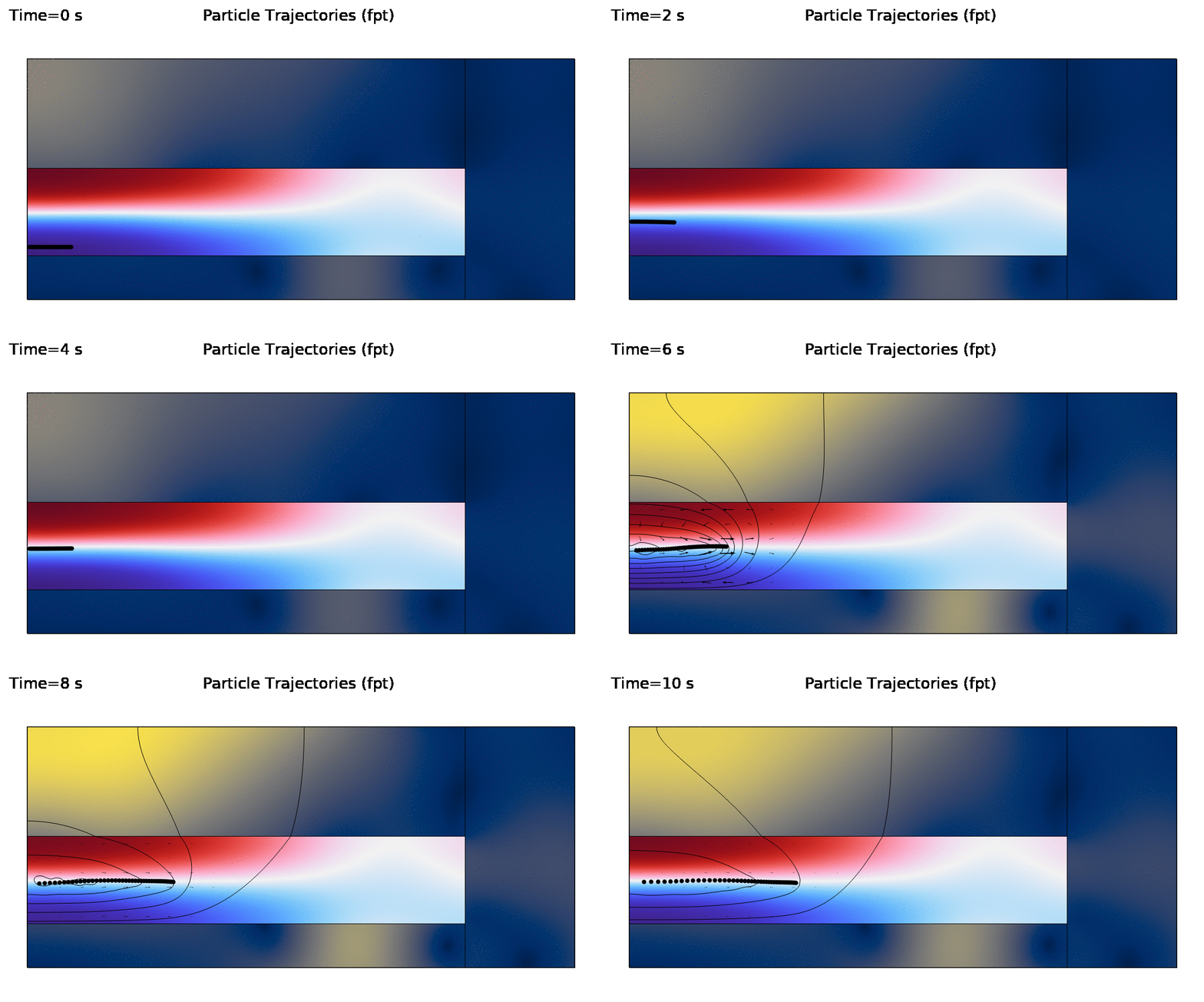
Optoakustophorese ist ein Begriff, der das Zusammenspiel zwischen Akustik und optischen Feldern beschreibt. In den meisten Fällen (so auch in diesem) erwärmt das optische Feld das Material und beeinflusst somit das akustische Feld. In diesem Beispiel einer akustischen Falle wird eine ... Mehr lesen

This model aims to demonstrate how a multilayer insulation can affect the temperature distribution of a satellite orbiting around the Earth. It is based on the Spacecraft Thermal Analysis model available in the Application Library. Mehr lesen
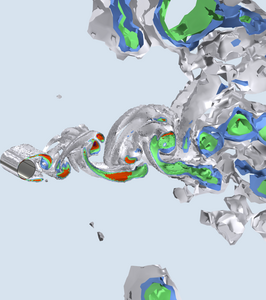
The model compare the two RANS models SST and SST-SAS for turbulent flow around a cylinder. The SST-SAS model resolve more transversal turbulent structures compared to the SST model. Mehr lesen

Because the atmosphere is nearly transparent to wavelengths in the range 8 to 13 µm (atmospheric window) for a clear sky, it is possible to cool down a surface even during a sunny day. This model compares the temperature distribution on a concrete block exposed to ambient and solar ... Mehr lesen


