
Lorenzo Bortot, CERN, Switzerland
Engineers and physicists at CERN go to great lengths to ensure that the high-power superconducting magnets that maintain the circular trajectory of particles inside the Large Hadron Collider (LHC) do not revert to a resistive state, an event known as a quench. To understand and prevent quench events, Lorenzo Bortot, an electrical engineer and research fellow at CERN, used numerical simulation to develop a multiphysics, multiscale, and multirate representation of the electrodynamics and thermal evolution of a quench event.
Suggested Stories
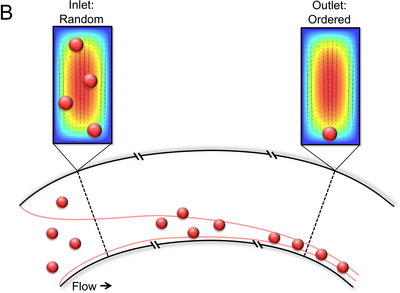
Modeling Inertial Focusing in Straight and Curved Microfluidic Channels
In many medical procedures and tests, it is necessary to isolate cells of interest for further analysis. Microfluidics ...
Keynote: Optimum Electromagnetic and Thermal Design of DC-Link Capacitors
Inverters change the DC produced by an electric vehicle's battery into the AC needed to drive its motors. Inside these ...
Keynote: Democratizing In Silico Ablation R&D via Simulation Apps
In this keynote talk from COMSOL Day: MedTech, Marcela Mercado Montoya of IN SILICO STEM introduces the capabilities ...

6 Beispiele für die simulationsbasierte Entwicklung von Lautsprechern
Von Kopfhörern für Virtual-Reality-Spiele bis hin zu leistungsstarken Wandlern für Hörgeräte: Hier sind 6 Beispiele ...


