
M. Bachmann, V. Avilov, A. Gumenyuk, and M. Rethmeier
BAM Federal Institute For Materials Research and Testing
Germany
High-power laser beam welding uses a localized heat source to achieve narrow deep welds and high welding rates. Engineers run into some difficulties because the use of a localized heat source often results in the distortion of metal components; spattering and the ejection of droplets from the weld pool results in underfills, undercuts, craters, blowholes, or blowouts.
A stationary magnetic field is applied to the laser welding process to improve its quality and counteract effects such as spattering. BAM Federal Institute For Materials Research and Testing in Germany are working to improve the quality of high-power laser beam welding using COMSOL Multiphysics. To model and simulate the laser beam welding, heat transfer, fluid dynamics, and electromagnetics were coupled and solved. This allowed BAM to accurately model the process by including Marangoni effects, gravity, latent heats of fusion, and Lorentz forces.
Suggested Stories
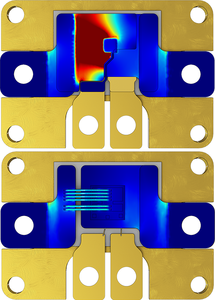
Innovative Packaging Design for Electronics in Extreme Environments
Power electronics appear in many everyday products, including smartphones, electronic car parts, and household ...
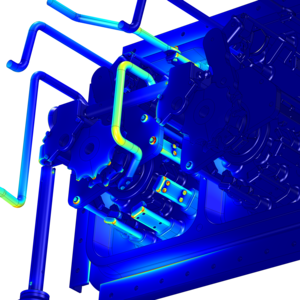
Dielectric Stress Simulation Advances Design of ABB Smart Grid-Ready Tap Changers
Consumers of power rely on fairly stable voltages. Transformers contain tap changers which vary the ratio of secondary ...
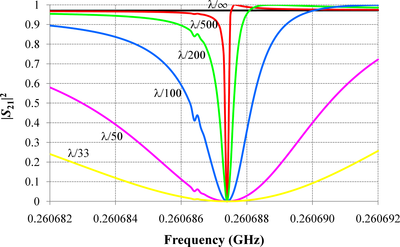
A 100-Fold Improvement in Lithography Resolution Realized with a 150-Year-Old “Perfect Imaging” System
The idea of "perfect imaging", that is a resolution less than the wavelength of light producing the image, was first ...
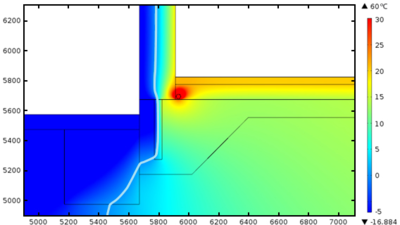
Using Multiphysics Simulation to Prevent Building Damage
In addition to surviving normal winters, a strong building must be able to survive the worst winters expected in a 50 ...


