
MIT Optimizes the Design of a Nuclear Fusion Machine with Simulation
Jeffrey Doody, MIT Plasma Science and Fusion Center, Cambridge, MA, USA
For over 50 years, power generation through nuclear fusion has been the focus of international research efforts to demonstrate its use as a clean, safe, and practically limitless source of energy. Researchers at the MIT Plasma Science and Fusion Center (PSFC) proposed the Advanced Divertor eXperiment (ADX) tokamak, which is a compact nuclear fusion machine with a modular design, to serve as an R&D testbed and further aid in the development of this technology. To optimize the design of the ADX tokamak, MIT researchers are using numerical simulation to ensure its vacuum vessel can survive worst-case scenario plasma disruption events.
Suggested Stories
Keynote: Numerical Simulation of Primary Alkaline Zn–MnO2 Batteries
In this keynote talk from COMSOL Day: Batteries & Fuel Cells, Xiaotong Chadderdon of Energizer introduces primary ...
Designing Next-Generation CO2 Removal Technology for Better Life in Space
NASA combines thermal modeling and experimental testing to find the best compressor design for the system that keeps ...
HPC-Enabled Simulation Aids in the Design of Customized High-Power Electrical Devices
Engineers at Block Transformatoren-Elektronik design custom coiled products, including transformers, power supplies, ...
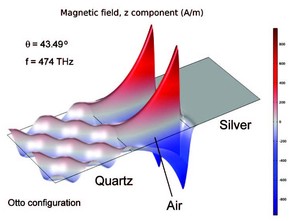
Surface Plasmon Resonance
Surface Plasmon Resonance (SPR) is created by surface plasmons, coherent electron oscillations existing between any ...


