
KAPL Analyzes CO2 Foil Thrust Bearing Characteristics with Simulation
Treevor Munroe
Knolls Atomic Power Laboratory, Niskayuna, NY
Knolls Atomic Power Laboratory (KAPL) is a research and development facility supporting the United States Naval Nuclear Propulsion Program. KAPL recently collaborated with Bettis Atomic Power Laboratory to test a supercritical carbon dioxide (S-CO2) Brayton power cycle system.
The system was designed to operate at high speed and high gas pressure, which means the turbine shaft bearings must withstand a wide range of radial and axial loads. The thrust bearings used to constrain the axial forces, however, showed extensive wear at certain speeds.
Using COMSOL Multiphysics, KAPL was able to analyze the structural mechanics, fluid mechanics, and heat transfer of the Brayton power cycle system to better understand the operation and deterioration of the thrust bearings. This allowed them to optimize geometry and to improve bearing performance.
Suggested Stories
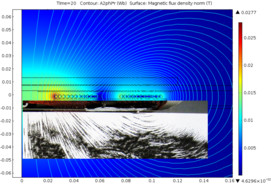
Multiphysics Simulation Helps Miele to Optimize Induction Stove Designs
The induction stove was designed to meet a consumer need for better precision and speed than traditional stoves. ...
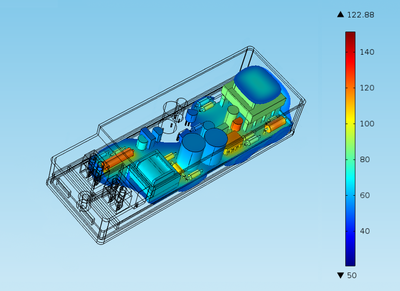
Keeping LEDs Cool Gets More Manageable Through Simulation
Light-emitting diodes (LEDs) offer many benefits over incandescent lighting, such as long life spans and high luminous ...

Simulation ebnet den Weg zur kommerziellen Fusionsenergie
CFS hat das Potenzial von Hochtemperatur-Supraleitermagneten und Hochfeld-Tokamaks für Fusionsmaschinen aufgezeigt. ...
ASML Advances Computing Breakthroughs with Multiphysics Modeling
At ASML, the development of cutting-edge computer chips and the machinery to produce them requires a complex ...


