
KAPL Analyzes CO2 Foil Thrust Bearing Characteristics with Simulation
Treevor Munroe
Knolls Atomic Power Laboratory, Niskayuna, NY
Knolls Atomic Power Laboratory (KAPL) is a research and development facility supporting the United States Naval Nuclear Propulsion Program. KAPL recently collaborated with Bettis Atomic Power Laboratory to test a supercritical carbon dioxide (S-CO2) Brayton power cycle system.
The system was designed to operate at high speed and high gas pressure, which means the turbine shaft bearings must withstand a wide range of radial and axial loads. The thrust bearings used to constrain the axial forces, however, showed extensive wear at certain speeds.
Using COMSOL Multiphysics, KAPL was able to analyze the structural mechanics, fluid mechanics, and heat transfer of the Brayton power cycle system to better understand the operation and deterioration of the thrust bearings. This allowed them to optimize geometry and to improve bearing performance.
Suggested Stories
Simulation Advances the Design of a Microfluidic Therapeutic Cell Sorter
The Technology Partnership (TTP), a firm that consults on technology development, created a vortex-actuated cell ...
Continuous Casting: Optimizing Both Machine and Process with Simulation
The process of continuous casting has transformed steel production, saving valuable resources while improving steel ...
Improving Efficiency in Iron Ore Sintering
VDEh-Betriebsforschungsinstitut (BFI) is one of Europe’s leading research institutions in the development of iron- and ...
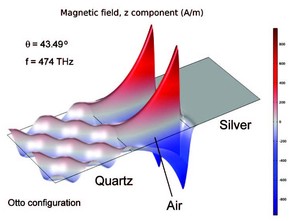
Surface Plasmon Resonance
Surface Plasmon Resonance (SPR) is created by surface plasmons, coherent electron oscillations existing between any ...


