
F. Curtis, J.D. Freels
Oak Ridge National Lab, TN, USA
In response to the increasing awareness of the risks associated with the proliferation of nuclear materials, the Global Threat Reduction initiative has called for research reactors currently using highly enriched uranium (HEU) fuel to be converted to low-enriched uranium (LEU) fuel. The High Flux Isotope Reactor (HFIR), located at Oak Ridge National Laboratory (ORNL), is one such reactor that uses HEU fuel.
Using multiphysics simulation, ORNL engineers are conducting researching and working toward a new design for the HFIR that will preserve the reactor's performance, minimize negative effects on operation efficiency, and ensure reactor safety once the reactor’s fuel has been converted. This process requires that highly accurate multiphysics analyses be conducted into the fluid-structure interaction (FSI) of the reactor’s fuel plates and that an understanding of how the new density of the LEU fuel will impact reactor performance is achieved. ORNL researchers developed a model of the fuel plate deflections in COMSOL Multiphysics that they validated against representative tests using core configurations similar to the HFIR. The model will be used to test new design possibilities and eventually help facilitate the reactor's conversion to LEU fuel.
Suggested Stories
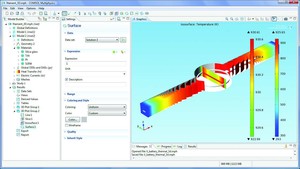
Optimization Slashes Energy Consumption in Silicon-Based MEMS CO2 Detectors
CEA-MINATEC is an international center for micro and nano-technologies which is funded by CEA, a French government ...
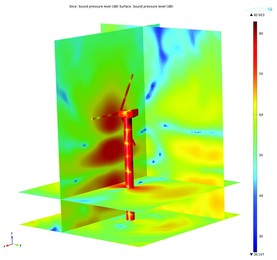
Wind Turbine Noise Reduction
Xi Engineering Consultants Ltd specializes in complex vibration issues, like those caused by wind turbines. The ...
Modeling the Electrochemistry of Blood Glucose Test Strips
Lifescan Scotland is a medical device company that designs and manufactures blood glucose monitoring kits for the ...
Multiphysik-Modellierung für ein besseres Verständnis der optomechanischen Brillouin-Interaktion
Forscher der Universität von Campinas und von Corning wollten herausfinden, wie Photoelastik und Effekte an ...


