
Ivana Milanovic, University of Hartford, USA
While covering the required fundamental material in undergraduate academic programs is the top priority, students require an extra set of knowledge and skills to flourish in the workforce. This is especially true in science, technology, engineering, and mathematics (STEM) fields, where there is rarely an abundance of time for inquiry-based learning and the development of field-specific skills. To address this issue, the University of Hartford integrated multiphysics modeling into their curricula. Using the Application Builder in the COMSOL Multiphysics® software, the university created simulation-based laboratory assignments through apps, which enhanced students’ physical intuition and their ability to visualize physical concepts.
Suggested Stories
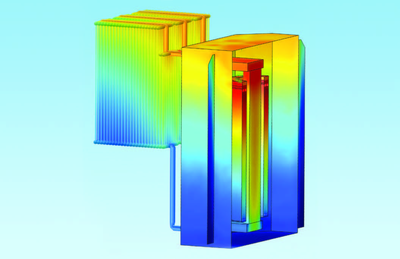
Simulation Enables the Next Generation of Power Transformers and Shunt Reactors
From power generation to its distribution to end users, power transformers and shunt reactors are used throughout the ...
Improving Gas Pipeline Squeeze-Off Standards with Numerical Simulation
Gas Technology Institute (GTI), a leader in natural gas research, development, and training, investigated industry ...
How Decaying Shells Help Preserve the Alkalinity of the Seas
Decaying seashells can release calcium carbonates, which help neutralize carbon dioxide in seawater. But ocean ...
Fuel Cells Poised to Replace India’s Diesel Generators
Inefficient and potentially harmful diesel generators are still the prevailing method of decentralized power ...


