
Marco Barink, Erica Coenen, TNO, Netherlands
The advantages of anisotropic properties in 3D printing materials have been difficult to exploit for product design, limited by material manufacturing and production methods. However, additive manufacturing is opening doors to material fabrication, allowing engineers to virtually design varying material properties into a single product. At the Netherlands Organization for Applied Scientific Research (TNO), researchers investigated virtual material design using multiphysics simulation and multiscale modeling.
To develop a procedure for designing anisotropy into 3D-printed structures, the researchers used COMSOL Multiphysics to study mechanical behavior in a unit cell, control material properties and the orientation of anisotropic fibers, and optimize local material distribution to achieve desired overall properties. To study material design on a larger scale, they extracted material parameters from the unit cell to include in a model of a full-scale 3D-printed object, and successfully applied methods of fully-coupled multiscale modeling to geometry and material design in several different applications.
Suggested Stories
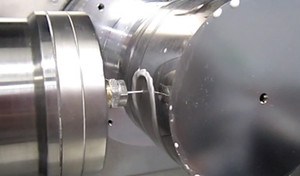
A Smooth Optical Surface in Minutes
Zeeko Ltd is a technology company that manufactures corrective polishing machines for optics and other surfaces. They ...
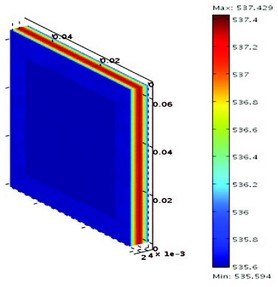
Battery Simulation Propels Electric Cars in China
Dr. Songrui Wang is a researcher at The Tianjin Institute of Power Sources, involved in battery testing and evaluation ...
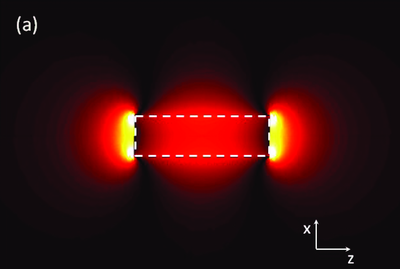
Nanoresonators Get New Tools for Their Characterization
Nanoresonators, or optical nanoantennas, manage the concentration, radiation, and absorption of light at the nanometer ...
Keynote: Optimum Electromagnetic and Thermal Design of DC-Link Capacitors
Inverters change the DC produced by an electric vehicle's battery into the AC needed to drive its motors. Inside these ...


