
Simulation Turns Up the Heat and Energy Efficiency at Whirlpool Corporation
N. Garcia-Polanco
Whirlpool Corporation, Italy
Engineers working on a joint research project between Whirlpool Corporation and the European initiative GREENKITCHEN project are using simulation to improve the energy efficiency of domestic ovens. Since only ten to twelve percent of the total energy expended by an oven is actually used to heat the food, the researchers had plenty to investigate. Using COMSOL Multiphysics® software and the Heat Transfer Module, the team created a model of Whirlpool’s Minerva oven to study the heat transfer processes of convection, conduction, and radiation. The resulting model, which simulates the standard test for energy consumption in the European Union (known as the “brick test”), analyzes the energy, temperature profile, and moisture concentration over different heating cycles. The results of this study will help with future initiatives at Whirlpool and GREENKITCHEN to reduce national energy consumption and improve energy efficiency in Europe.
Suggested Stories
National Grid Models Underground Cable Routes
U.K. National Grid bears responsibility for maintaining the high-voltage transmission network in the U.K. Determining ...
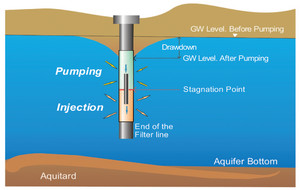
Pumping and Injecting from a Single Borehole
Professor Dr. Martin Sauter leads a group at the University of Göttingen in research on hydrogeology. Cooperating with ...
Optimizing Hematology Analysis: When Physical Prototypes Fail, Simulation Provides the Answers
Hematology analysis, the analysis of a blood sample to determine a variety of hematological parameters, is a major ...
Developing a New Microreactor for Organic Synthesis Using Microwave Heating
The chemical reactions used to generate solvents and certain pharmaceuticals rely on organic synthesis, a process of ...


