
Lorenzo Bortot, CERN, Switzerland
Engineers and physicists at CERN go to great lengths to ensure that the high-power superconducting magnets that maintain the circular trajectory of particles inside the Large Hadron Collider (LHC) do not revert to a resistive state, an event known as a quench. To understand and prevent quench events, Lorenzo Bortot, an electrical engineer and research fellow at CERN, used numerical simulation to develop a multiphysics, multiscale, and multirate representation of the electrodynamics and thermal evolution of a quench event.
Suggested Stories
Multiphysics Protects Wind Turbines when Lightning Strikes
Lightning Technologies, an NTS company, is a world leader in the design and validation of sophisticated lightning ...
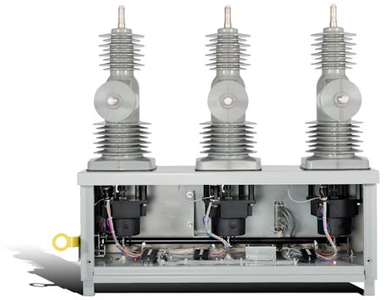
How Reclosers Ensure a Steady Supply of Power: It’s All in the Magnet
When a tree branch touches overhead cables and causes a momentary short circuit, your lights may flicker. A device ...
Heating Buildings with Solar Energy Stored in Sand
Polar Night Energy used thermal modeling to optimize the design of a heat storage and distribution system powered by ...
3D-Modellierung von Armierungsverlusten in Hochspannungskabeln
NKT HV Cables nutzten numerische Modellierung, um elektromagnetische Felder zu untersuchen und Armierungsverluste in ...


