
Lorenzo Bortot, CERN, Switzerland
Engineers and physicists at CERN go to great lengths to ensure that the high-power superconducting magnets that maintain the circular trajectory of particles inside the Large Hadron Collider (LHC) do not revert to a resistive state, an event known as a quench. To understand and prevent quench events, Lorenzo Bortot, an electrical engineer and research fellow at CERN, used numerical simulation to develop a multiphysics, multiscale, and multirate representation of the electrodynamics and thermal evolution of a quench event.
Suggested Stories
Simulation Summit Panel: The Multiphysics Roadmap
Speakers from NVIDIA, Stanford University, and MathWorks, as well as COMSOL and moderator DE 24/7, discuss the future ...
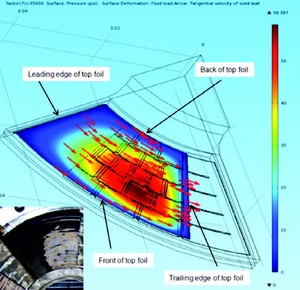
Multiphysics Analysis of CO2 Foil Thrust Bearing Characteristics
Knolls Atomic Power Laboratory (KAPL) is a research and development facility supporting the United States Naval ...
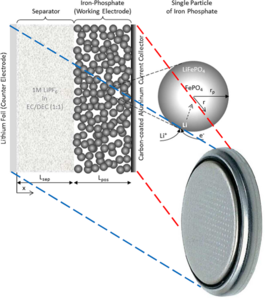
Highly Accurate Li-ion Battery Simulation
Battery management systems (BMSs) are designed to protect the batteries and predict their charge level. They use ...
Multiphysics Software Models Mean Flow-Augmented Acoustics in Rocket Systems
Historically, difficulties in modeling and predicting combustion instability have led engineers to costly physical ...


