
J. Leman
POWER Engineers, ID, USA
Designing power transmission lines requires accounting for many factors: mechanical stress due to environmental conditions and hardware loads, performance testing, and--of course--electrical analysis. Transmission line hardware contains both insulating and conducting assemblies. One common electrical phenomenon is called corona discharge, which occurs when electric fields near the surfaces of insulating assemblies and high-voltage conductors cause the surrounding air molecules to ionize. This can cause electromagnetic interference, visible light, energy losses, and audible noise. In a project to reduce corona discharge in transmission lines, Jon Leman, a senior project engineer at the consulting firm POWER Engineers, Inc. used COMSOL Multiphysics to model an insulator assembly. His team used their simulation to determine the electric field strength and electric potential around different surfaces of the transmission line hardware. They used their results to predict which areas were most susceptible to corona discharge, and gained valuable knowledge about how insulator assembly designs can be modified for better performance.
Suggested Stories
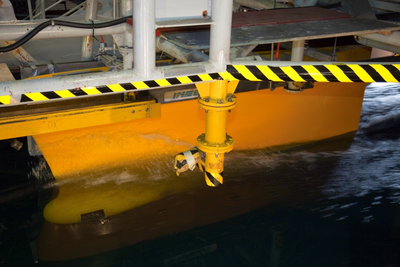
Sonar Dome Vibration Analysis
There has been a recent move towards utilizing bulbous bows on ships to house different types of sonar systems, but it ...
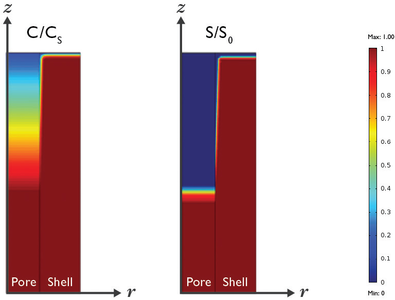
Simulating the Release Mechanism in Drug-Eluting Stents
Stent insertion through the coronary artery is a common procedure used to treat restricted blood flow to the heart ...
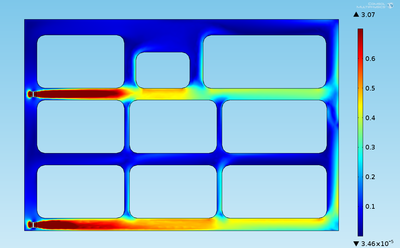
Battling Corrosion in Nuclear Waste Storage Facilities
Nuclear sites in Italy are being decommissioned, leaving questions about how to safely manage and store radioactive ...
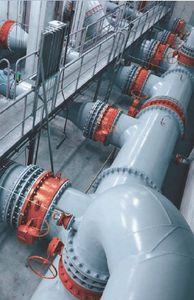
Fine Tuning for Water Purification
Amsterdam Water Supply (AWS) of the Netherlands produces some of the cleanest drinking water in the world using an ...


