
J. Leman
POWER Engineers, ID, USA
Designing power transmission lines requires accounting for many factors: mechanical stress due to environmental conditions and hardware loads, performance testing, and--of course--electrical analysis. Transmission line hardware contains both insulating and conducting assemblies. One common electrical phenomenon is called corona discharge, which occurs when electric fields near the surfaces of insulating assemblies and high-voltage conductors cause the surrounding air molecules to ionize. This can cause electromagnetic interference, visible light, energy losses, and audible noise. In a project to reduce corona discharge in transmission lines, Jon Leman, a senior project engineer at the consulting firm POWER Engineers, Inc. used COMSOL Multiphysics to model an insulator assembly. His team used their simulation to determine the electric field strength and electric potential around different surfaces of the transmission line hardware. They used their results to predict which areas were most susceptible to corona discharge, and gained valuable knowledge about how insulator assembly designs can be modified for better performance.
Suggested Stories
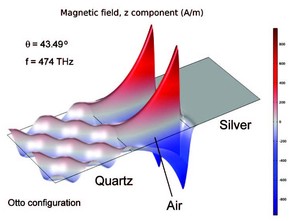
Surface Plasmon Resonance
Surface Plasmon Resonance (SPR) is created by surface plasmons, coherent electron oscillations existing between any ...
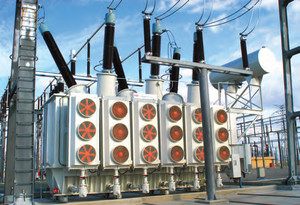
Upgrading the Nuts and Bolts of the Electrical Grid for a New Generation
Migrating the electrical grid to a “smart grid” is usually discussed in terms of IT issues or embedded systems. Yet, ...
Simulation Applications Help Shape the Design of Car Audio Systems
Audio entertainment systems for luxury cars must provide end users with the highest quality of in-car listening ...
Lightweighting with Aluminum: Corrosion Apps Guide Leading Design
To achieve fuel efficiency goals, conventional materials for car structures, such as structural steel, must be ...


