
General Atomics Designs Helicon Antenna for Tokamak with Simulation
Humberto Torreblanca, General Atomics, USA
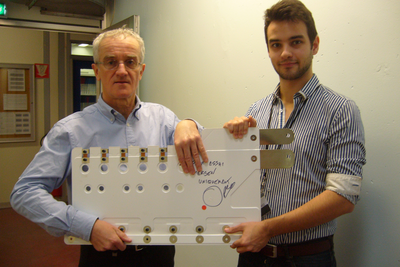
Built by engineers at General Atomics, the DIII-D tokamak needs to achieve temperatures that are 10 times hotter than the core of the Sun to achieve nuclear fusion. To accomplish this, a novel heating system using a helicon antenna that can inject 1 megawatt of RF power is being designed and built. Humberto Torreblanca, the DIII-D tokamak chief operator, and his team are using multiphysics simulation to model all aspects of the design, such as the magnetic field distribution inside and outside the tokamak vessel as well as the electric field distribution and RF losses of the helicon antenna.
Suggested Stories
Keynote: Numerical Simulation of Primary Alkaline Zn–MnO2 Batteries
In this keynote talk from COMSOL Day: Batteries & Fuel Cells, Xiaotong Chadderdon of Energizer introduces primary ...
Keynote: Democratizing In Silico Ablation R&D via Simulation Apps
In this keynote talk from COMSOL Day: MedTech, Marcela Mercado Montoya of IN SILICO STEM introduces the capabilities ...
Control of Joule Heating Extends Performance and Device Life
Large electrical systems carrying high currents could pose a danger if any of their components, such as fuses and bus ...
Erfüllung von Qualitätsstandards in der Öl- und Gasförderung mit Ultraschallwandlern
Baker Hughes erzielt eine Einsparung von 30 % bei den Prototypenentwicklungskosten durch den Einsatz von 3D ...


