
General Atomics Designs Helicon Antenna for Tokamak with Simulation
Humberto Torreblanca, General Atomics, USA
Built by engineers at General Atomics, the DIII-D tokamak needs to achieve temperatures that are 10 times hotter than the core of the Sun to achieve nuclear fusion. To accomplish this, a novel heating system using a helicon antenna that can inject 1 megawatt of RF power is being designed and built. Humberto Torreblanca, the DIII-D tokamak chief operator, and his team are using multiphysics simulation to model all aspects of the design, such as the magnetic field distribution inside and outside the tokamak vessel as well as the electric field distribution and RF losses of the helicon antenna.
Suggested Stories
National Grid Models Underground Cable Routes
U.K. National Grid bears responsibility for maintaining the high-voltage transmission network in the U.K. Determining ...
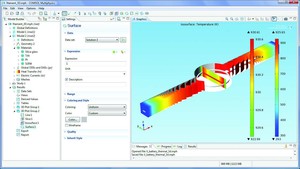
Optimization Slashes Energy Consumption in Silicon-Based MEMS CO2 Detectors
CEA-MINATEC is an international center for micro and nano-technologies which is funded by CEA, a French government ...
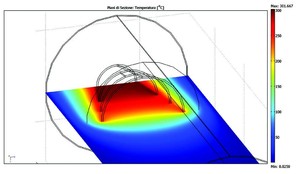
Around the Clock Solar Power
Italian utility ENEL and the Italian National Agency for New Technologies joined together to develop a new kind of ...
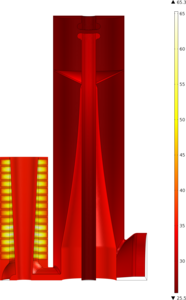
Doubling Beam Intensity Unlocks Rare Opportunities for Discovery at Fermi National Accelerator Laboratory
Behind the discovery of the most fundamental and rare physical processes within our universe is powerful technology, ...


