
NEXT ENERGY Analyzes Heat Transfer in Lithium-Ion Batteries
Gerd Liebig, Pamina Bohn, NEXT ENERGY EWE Research Centre for Energy Technology, Germany
Lithium-ion batteries, which have a tendency to degrade at high temperatures, must adhere to stringent regulations guaranteeing their ability to withstand operating temperature fluctuations. Researchers at NEXT ENERGY used heat transfer modeling to study whether high welding temperatures can create enough temperature propagation within cells to cause irreversible damage, such as electrolyte decomposition and capacity loss. They discovered that tab welding can, in fact, induce irreversible damage, but laser welding is significantly less detrimental.
Suggested Stories
Ein offenes Ohr für die Welt dank Hörgerätetechnologie
In diesem Interview spricht Michele Colloca von Sonion über die größten Herausforderungen bei der Entwicklung von ...
Multiphysik-Modellierung für ein besseres Verständnis der optomechanischen Brillouin-Interaktion
Forscher der Universität von Campinas und von Corning wollten herausfinden, wie Photoelastik und Effekte an ...
Look Inside the Battery with COMSOL Multiphysics®
The key to designing high-performance, durable, and safe batteries is to first understand the battery technology and ...
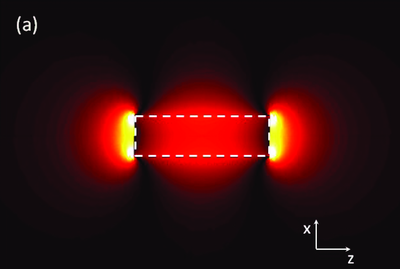
Nanoresonators Get New Tools for Their Characterization
Nanoresonators, or optical nanoantennas, manage the concentration, radiation, and absorption of light at the nanometer ...


