
Ivana Milanovic, University of Hartford, USA
While covering the required fundamental material in undergraduate academic programs is the top priority, students require an extra set of knowledge and skills to flourish in the workforce. This is especially true in science, technology, engineering, and mathematics (STEM) fields, where there is rarely an abundance of time for inquiry-based learning and the development of field-specific skills. To address this issue, the University of Hartford integrated multiphysics modeling into their curricula. Using the Application Builder in the COMSOL Multiphysics® software, the university created simulation-based laboratory assignments through apps, which enhanced students’ physical intuition and their ability to visualize physical concepts.
Suggested Stories

6 Beispiele für die simulationsbasierte Entwicklung von Lautsprechern
Von Kopfhörern für Virtual-Reality-Spiele bis hin zu leistungsstarken Wandlern für Hörgeräte: Hier sind 6 Beispiele ...
Ein offenes Ohr für die Welt dank Hörgerätetechnologie
In diesem Interview spricht Michele Colloca von Sonion über die größten Herausforderungen bei der Entwicklung von ...
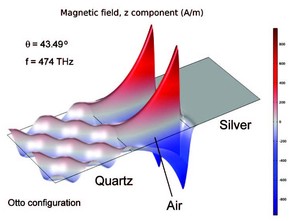
Surface Plasmon Resonance
Surface Plasmon Resonance (SPR) is created by surface plasmons, coherent electron oscillations existing between any ...
Lighting the Way for Improved Synchrotron Vacuum Chambers at RadiaSoft
One of the goals of the Argonne National Laboratory (ANL) is to increase the brightness of synchrotron beams for the ...


