
Ivana Milanovic, University of Hartford, USA
While covering the required fundamental material in undergraduate academic programs is the top priority, students require an extra set of knowledge and skills to flourish in the workforce. This is especially true in science, technology, engineering, and mathematics (STEM) fields, where there is rarely an abundance of time for inquiry-based learning and the development of field-specific skills. To address this issue, the University of Hartford integrated multiphysics modeling into their curricula. Using the Application Builder in the COMSOL Multiphysics® software, the university created simulation-based laboratory assignments through apps, which enhanced students’ physical intuition and their ability to visualize physical concepts.
Suggested Stories
Keynote: Electromagnetic-Based Hyperthermia Therapy for Treatment of Brain Cancer
This keynote talk from the COMSOL Conference 2024 Boston explores how Dr. Dario Rodrigues from the University of ...
Manipulate and Control Sound: How Mathematical Modeling Supports Cutting-Edge Acoustic Metamaterials Research
Researchers at Duke University are using numerical modeling to develop metamaterial structures for acoustic cloaking. ...

6 Beispiele für die simulationsbasierte Entwicklung von Lautsprechern
Von Kopfhörern für Virtual-Reality-Spiele bis hin zu leistungsstarken Wandlern für Hörgeräte: Hier sind 6 Beispiele ...
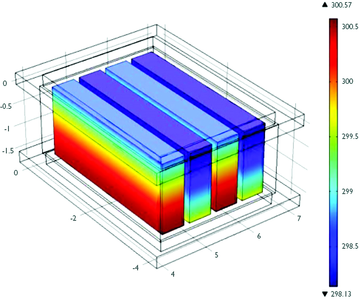
Simulation Helps Improve Atmosphere Revitalization Systems for Manned Spacecraft
To ensure astronaut safety on space missions, it is necessary to routinely revitalize the atmosphere in manned ...


