
Ivana Milanovic, University of Hartford, USA
While covering the required fundamental material in undergraduate academic programs is the top priority, students require an extra set of knowledge and skills to flourish in the workforce. This is especially true in science, technology, engineering, and mathematics (STEM) fields, where there is rarely an abundance of time for inquiry-based learning and the development of field-specific skills. To address this issue, the University of Hartford integrated multiphysics modeling into their curricula. Using the Application Builder in the COMSOL Multiphysics® software, the university created simulation-based laboratory assignments through apps, which enhanced students’ physical intuition and their ability to visualize physical concepts.
Suggested Stories
Get an Inside Look at How Veryst Engineering Looks Inside Designs
Step into the material test lab at Veryst Engineering to see how they develop accurate material models for use in ...
Identifying the Root Cause of Electronics Failures with Simulation Apps
The Centre for Electronic Corrosion (CELCORR) research group at the Technical University of Denmark predicts ...
Keynote: Using COMSOL Multiphysics® for Circuit Board Thermal Analysis
The aerospace and defense industry requires stronger circuit boards than those needed for everyday electronics due to ...
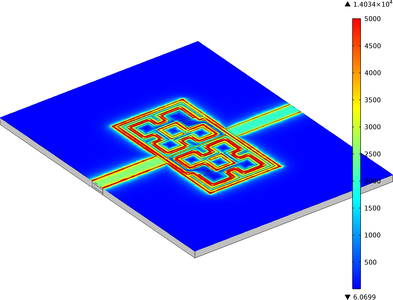
Analysis of Spiral Resonator Filters
As the world becomes more digital, there is growing demand for advanced wireless systems. Increasingly high data rate ...


