
Defining Surface Plasmon Resonance Effects with Simulation
Sergei Yushanov, Jeffrey S. Crompton, Luke T. Gritter, and Kyle C. Koppenhoefer
AltaSim Technologies
Columbus, OH
USA
Surface Plasmon Resonance (SPR) is created by surface plasmons, coherent electron oscillations existing between any two materials where the real part of the dielectric function changes sign across the interface. SPR technology is based on the electromagnetic field component of incident light penetrating into a surface and it can be used to detect molecular adsorption on surfaces.
Plasmon excitation typically exists in two configurations: the Kretschmann-Raether configuration, where a thin metal film is sandwiched between a dielectric and air, and the incident wave is from the dielectric side; and the Otto configuration, where an air gap exists between the dielectric and the metal. Using COMSOL Multiphysics, the effect of the SPR on the electromagnetic field can be defined, which has allowed for the measurement of surface contaminants and nano-scale photonic devices.
Suggested Stories
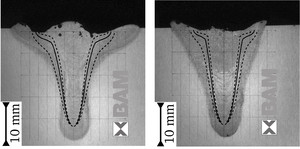
Magnets Improve Quality of High-Power Laser Beam Welding
High-power laser beam welding uses a localized heat source to achieve narrow deep welds and high welding rates. ...
Industrial Applications of Carbon and Graphite for Thermal Management
At GrafTech International, engineers develop carbon and graphite products for applications from consumer electronics ...
Defending Automotive Components Against Corrosive Destruction
Galvanic corrosion, which occurs when the surfaces of different adjoining metals begin to degrade, costs the ...
The Sound of Perfection Thanks to the Modeling of Acoustic Metasurfaces
At the École Polytechnique Fédérale de Lausanne (EPFL), engineers have designed an acoustic metasurface that could be ...


