


Gezeigt werden Events mit Startzeiten zwischen: 08:00 – 20:00
Suchen
Bevorstehende Events
Lade Events
März 3–6
| 11:00 EST
Introduction to COMSOL Multiphysics®
COMSOL
Trainingskurs
Online


März 10
| 09:00 CET
GPU Acceleration in COMSOL®
COMSOL
Webinar
Online

März 10
| 10:00 GMT
Time-Optimal Control with COMSOL Multiphysics® in 18 Minutes
COMSOL
Webinar
Online


März 10–13
| 11:00 EDT
CFD Modeling in COMSOL Multiphysics®
COMSOL
Trainingskurs
Online
März 12
| 14:00 EDT
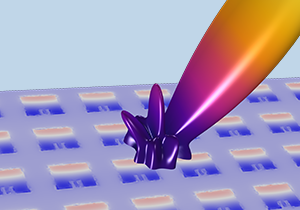
Phased-Array Antenna Modeling: Techniques to Optimize RF Design
Machine/Electronic Design
Webinar
Online


März 15–19
| 10:00 CDT
AMPP
COMSOL
Exhibition
Houston
März 17–19
| 09:00 EDT
Optical Fiber Communications Exhibition
COMSOL
Exhibition
Los Angeles
März 17
| 09:00 CET
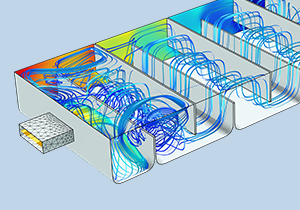
CFD Modeling with COMSOL® in 18 Minutes
COMSOL
Webinar
Online

März 17
| 11:00 EDT
Modeling Gyroscopes and Accelerometers in COMSOL Multiphysics®
COMSOL
Webinar
Online


März 19
| 14:00 EDT
Exploring Light and Life: Nanophotonics and AI for Molecular Sequencing and Single-Cell Phenotyping
IEEE
Webinar
Online
März 23–26
| 09:00 EDT
International Battery Seminar
COMSOL
Exhibition
Orlando
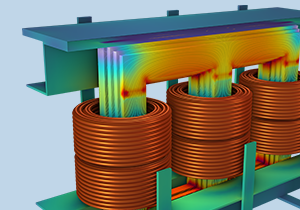
März 24–27
| 11:00 EDT
AC/DC Modeling in COMSOL Multiphysics®
COMSOL
Trainingskurs
Online
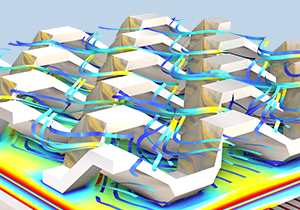
März 25
| 10:00 GMT
Solving Large Models in COMSOL Multiphysics®
COMSOL
Webinar
Online


März 26
| 11:00 EDT
COMSOL Day: Electric Power
COMSOL
COMSOL Day
Online

März 26
| 11:00 EDT
Photo-Thermo-Optical Effects in Metasurfaces: From Optical to Thermochemical Devices
Photonics Spectra
Webinar
Online

Apr. 14
| 08:00 CEST
Modeling Granular Flow in COMSOL®
COMSOL
Webinar
Online

Apr. 14
| 11:00 EDT
Multiphysics Modeling for Acoustics Applications, Part 1: Acoustic–Structure Interaction (Vibroacoustics)
COMSOL
Webinar
Online
Apr. 14–17
| 11:00 EDT
Introduction to COMSOL Multiphysics®
COMSOL
Trainingskurs
Online
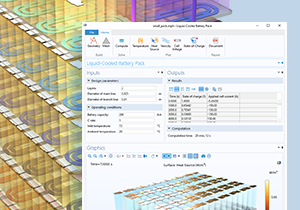
Apr. 21
| 08:00 CEST
Simulation Apps & Digital Twins for the Renewable Energy Industry
COMSOL
Webinar
Online
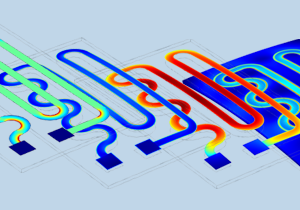
Apr. 21–24
| 11:00 EDT
Heat Transfer Modeling in COMSOL Multiphysics®
COMSOL
Trainingskurs
Online
Apr. 28–29
| 09:00 EDT
Introduction to COMSOL Multiphysics®
COMSOL
Trainingskurs
Burlington

Apr. 30
| 09:00 BST
Modeling Biochemical Sensors and Testing Devices with COMSOL®
COMSOL
Webinar
Online

Mai 5
| 11:00 EDT
Multiphysics Modeling for Acoustics Applications, Part 2: Acoustic-Thermal Interaction (Thermoacoustics)
COMSOL
Webinar
Online
Mai 5–8
| 11:00 EDT
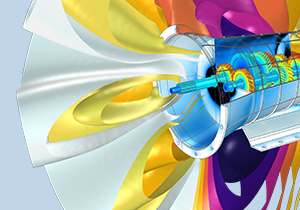
Acoustics Modeling in COMSOL Multiphysics®
COMSOL
Trainingskurs
Online

Mai 8
| 12:00 PDT
COMSOL Simulation Summit: Santa Clara
COMSOL
Summit
Santa Clara
Mai 12
| 08:00 CEST
Equation-Based Modeling with COMSOL®
COMSOL
Webinar
Online
Mai 19
| 08:00 CEST
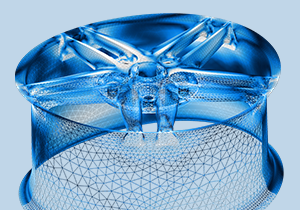
Preparing CAD for Analysis with COMSOL®
COMSOL
Webinar
Online
Mai 19–22
| 11:00 EDT
Introduction to COMSOL Multiphysics®
COMSOL
Trainingskurs
Online
Mai 26
| 11:00 EDT
Multiphysics Modeling for Acoustics Applications, Part 3: Acoustic-Flow Interaction (Aeroacoustics)
COMSOL
Webinar
Online
Juni 9
| 08:00 CEST
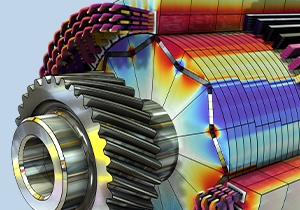
Modeling Electric Motors & Generators
COMSOL
Webinar
Online
Juni 23
| 08:00 CEST
CFD Modeling with COMSOL® in 18 Minutes
COMSOL
Webinar
Online
Juni 23–26
| 11:00 EDT
Introduction to COMSOL Multiphysics®
COMSOL
Trainingskurs
Online
8 von 32 Events werden angezeigt
32 von 32 Events werden angezeigt
Trainings durch Certified Consultants
Aufgezeichnete Webinare
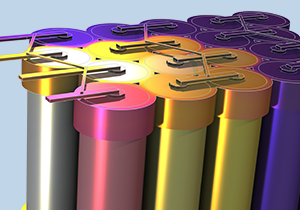
Why Model and Simulate Batteries?
Webinar
Mar 04

Editing, Repairing, and Combining Imported STL Files with CAD
Webinar
Mar 03

Modeling Rotordynamics with COMSOL Multiphysics®
Webinar
Feb 26
The Basics of COMSOL® in 18 Minutes
Webinar
Feb 26

Modeling Nonlinear Photonics in Dielectric Resonant Metasurfaces Using COMSOL®
Webinar
Feb 18
Modeling and Simulation of MEMS Devices
Webinar
Feb 04
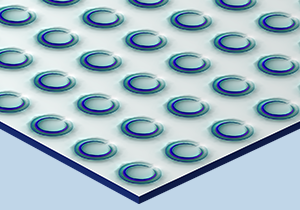
Modeling Photonic Crystals in COMSOL Multiphysics
Webinar
Jan 29

Modeling Emerging Battery Technologies with COMSOL Multiphysics®
Webinar
Jan 28
The Basics of COMSOL Multiphysics® in 18 Minutes
Webinar
Jan 27
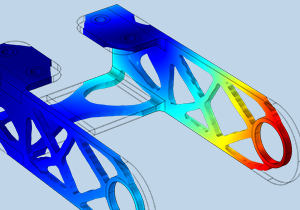
Shape and Topology Optimization with COMSOL Multiphysics®
Webinar
Jan 22
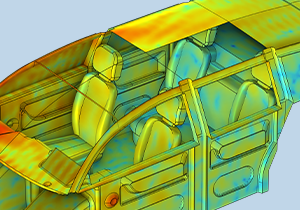
Automotive Acoustics Analysis Using COMSOL Multiphysics
Webinar
Jan 21

Polymer Flow Modeling
Webinar
Jan 13
Parameter Estimation for Nonlinear Materials
Webinar
Dec 11

Introducing COMSOL Multiphysics® Version 6.4
Webinar
Dec 10
Multiphysics Simulation of Power Transformers
Webinar
Dec 09
Multiphysics Simulation for Vehicle Electrification
Webinar
Dec 02
Optimising Manufacturing Processes Through Simulation
Webinar
Nov 26
Designing Efficient Electric Motors with COMSOL Multiphysics
Webinar
Nov 26

Efficient Battery Modeling with Surrogate Models
Webinar
Nov 19

Automating Your Modeling Workflow in COMSOL Multiphysics®
Webinar
Nov 18
The Basics of COMSOL Multiphysics® in 18 Minutes
Webinar
Nov 11

Modeling Pipe Flow & Heat in COMSOL Multiphysics®
Webinar
Nov 06
Modeling Gyroscopes and Accelerometers in COMSOL Multiphysics®
Webinar
Oct 30
Modeling and Simulation for Electric Motor Design
Webinar
Oct 15
Simulating Electrical Power Systems for the Grid
Webinar
Oct 14
Unravelling Chemomechanical Effects in Lithium-Ion Batteries
Webinar
Oct 09
Optimierung keramischer 3D-Drucke durch Simulation
Webinar
Oct 09
Modeling Next-Generation Battery Technologies with COMSOL Multiphysics®
Webinar
Oct 06
Modeling Emerging Battery Technologies with COMSOL Multiphysics®
Webinar
Sep 25
Modeling and Simulation of MEMS Devices
Webinar
Sep 23

Elektrische Entladungen modellieren
Webinar
Sep 18
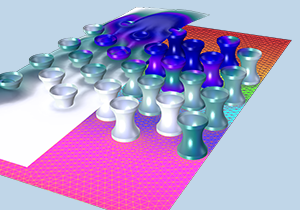
Modeling Reaction Kinetics and Pharmacokinetics with COMSOL Multiphysics®
Webinar
Sep 11
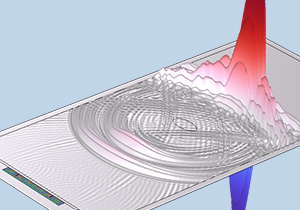
Modeling Ultrasound for Biomedical Applications
Webinar
Sep 09

Optimization of Thermal Management Systems
Webinar
Sep 03

Prediction of Electromagnetic Signatures of Naval Vessels with COMSOL Multiphysics
Webinar
Aug 28

Modeling Room Acoustics in COMSOL Multiphysics®
Webinar
Aug 19
Modeling and Simulation for Electric Motor Design
Webinar
Aug 14

Moisture Transport Modeling in COMSOL Multiphysics®
Webinar
Aug 07
Modeling Hydrogen Fuel Cells and Electrolyzers
Webinar
Aug 06
The Basics of COMSOL Multiphysics® in 18 Minutes
Webinar
Aug 05
Modeling Acoustic Metamaterials in COMSOL Multiphysics
Webinar
Jul 31

Fatigue and Durability Analysis Using COMSOL Multiphysics®
Webinar
Jul 24

Biomedical Modeling with COMSOL Multiphysics
Webinar
Jul 17
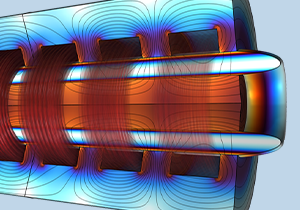
Understanding Liquid Metal Transport in Magnetic Fields — Simulating Magnetohydrodynamic Duct Flow
Webinar
Jul 11
Modeling Electric Motors and Drivetrains
Webinar
Jul 10

Memristor Modeling with COMSOL Multiphysics®
Webinar
Jul 02
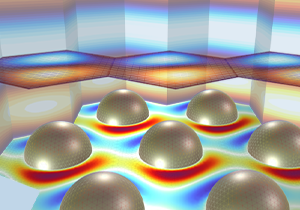
Modellierung optischer Nanostrukturen mit COMSOL Multiphysics®
Webinar
Jun 17
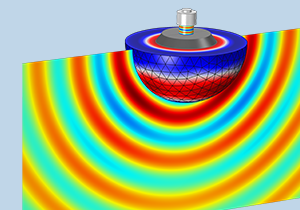
Underwater Acoustics
Webinar
Jun 12
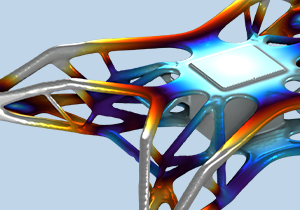
Optimization in Structural Mechanics
Webinar
Jun 12
Hydrogen Technology Innovation with Simulation
Webinar
Jun 12
Modeling Hydrogen Fuel Cells and Electrolyzers
Webinar
Jun 12
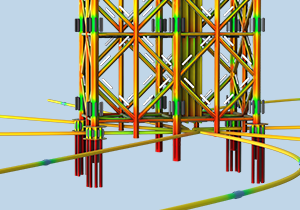
Modeling Chemical Reactions and Reacting Flows Using COMSOL Multiphysics®
Webinar
Jun 05
Introduction to Multibody Dynamics Modeling with COMSOL Multiphysics
Webinar
May 28
Automotive Acoustics Analysis Using COMSOL Multiphysics®
Webinar
May 27

Improving Thermal Management of Batteries with COMSOL Multiphysics®
Webinar
May 09
Demokratisierung der Multiphysik-Simulation
Webinar
May 08

The Basics of COMSOL Multiphysics® in 18 Minutes
Webinar
Apr 15

Wave & Ray Optics Modeling with COMSOL®
Webinar
Apr 09

Optimization in RF and Wave Optics
Webinar
Apr 09

Multiphysics Simulation in Semiconductor Packaging
Webinar
Apr 03
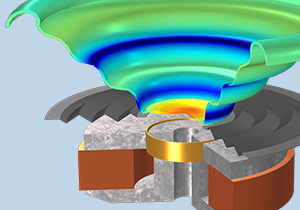
Acoustics in Electronics Webinar Series, Part 1: Loudspeakers
Webinar
Mar 25
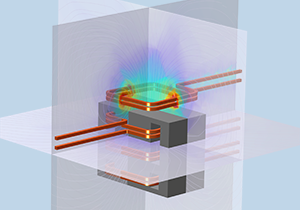
Simulating Electrical Power Systems for the Grid
Webinar
Mar 20
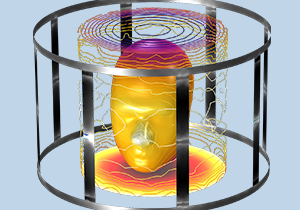
Modellierung biomedizinischer Geräte mit COMSOL Multiphysics®
Webinar
Mar 20
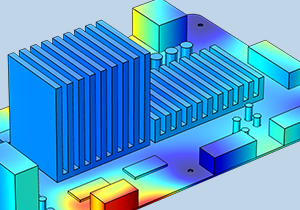
Multiphysics Modeling of Electronic Components
Webinar
Mar 20
Improving Thermal Management of Batteries with COMSOL Multiphysics®
Webinar
Mar 18

Modeling Chemical Reactions and Reacting Flows Using COMSOL Multiphysics®
Webinar
Mar 06
6 von 66 Events werden angezeigt
66 von 66 Events werden angezeigt
- Produktinformationen
- Produkte
- Spezifikationstabelle
- Lizenzoptionen
- Systemanforderungen
- Release-Historie
- Support und Service
- Support Center
- Meine Supportfälle
- Knowledge Base
- Partner und Consultants
- Dokumentation
- Produkt Download
- Unternehmen
- Über COMSOL
- Karriere
- Presse
- Kontakt
- |
- Datenschutzerklärung
- |
- Warenzeichen
- |
- Cookie Settings
- © 2026 by COMSOL. Alle Rechte vorbehalten


